

Uncover the benefits of flavanols
Resources for health professionals and researchers
Download the Flavanols, Health and Food factsheet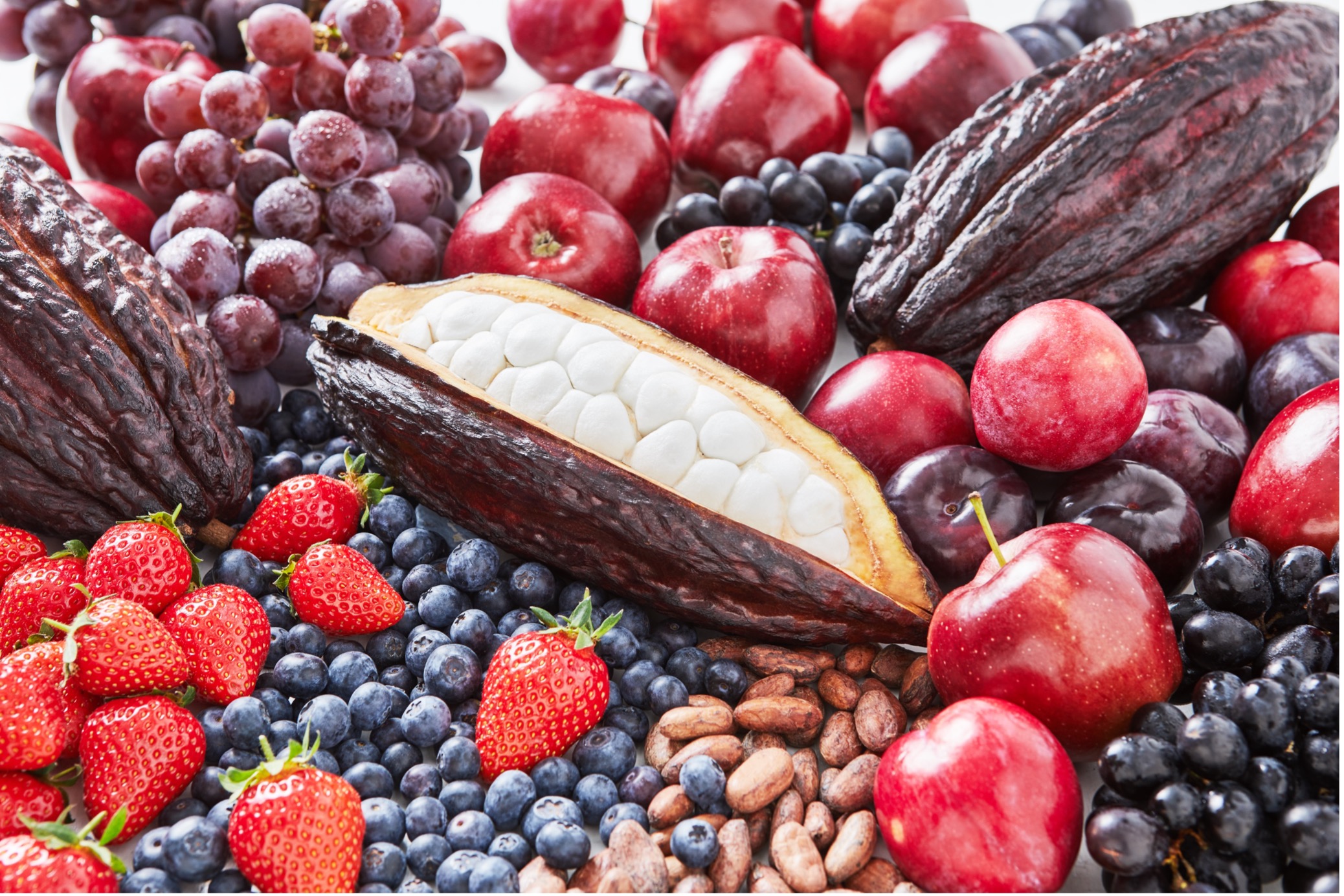
As health professionals, your audiences are looking for your help to guide them through the complex information about these healthy compounds. Here you’ll find information on what flavanols are and their health benefits, the latest dietary guidance on flavanols, and a listing of foods that are high in flavanols.
What are flavanols?
Flavanols are a group of naturally occurring compounds found in various plant-based foods such as cocoa, tea, apples, plums and many berries. Decades of research suggest that flavanols can help maintain and optimize health and reduce the risk of certain diseases.
Flavanol health benefits
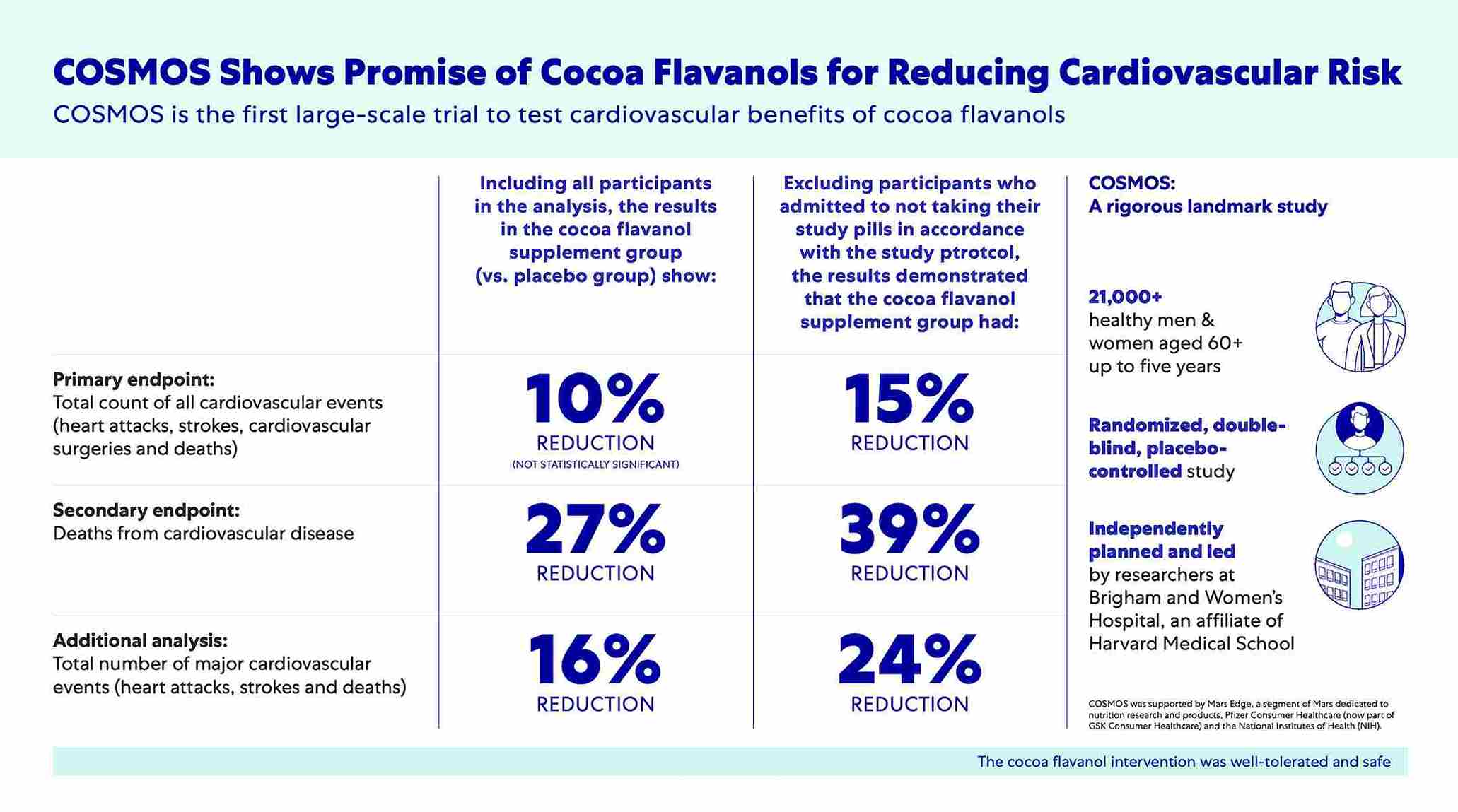
The COcoa Flavanol and Multivitamin Outcomes Study (COSMOS) is recognized as a landmark trial in nutrition. Initiated and led by researchers at Brigham and Women’s Hospital, it investigated the impact of flavanols on health. COSMOS is a large-scale, five-year clinical dietary intervention trial involving over 21,000 generally healthy men and women from across the U.S., aged 60 years and older. It is a randomized, double-blinded, placebo-controlled dietary intervention trial. Participants took a daily supplement of 500mg of cocoa flavanols for five years.
Cardiovascular health
The results of COSMOS showed a beneficial effect from daily cocoa flavanol supplementation on cardiovascular health.
Download the COSMOS paper: ‘Effect of cocoa flavanol supplementation for the prevention of cardiovascular disease events: the COcoa Supplement and Multivitamin Outcomes Study (COSMOS) randomized clinical trial’.
The COSMOS parent trial is augmented by several independent ancillary studies. These include participants from the COSMOS cohort and take advantage of the COSMOS trial design, but consider additional endpoints related to health.
Cognitive health
The ancillary trial called COSMOS-Web sought to assess the impact of flavanols on memory and cognition on a large scale. Led by researchers at Columbia University, it involved over 3,500 participants enrolled in the COSMOS parent trial for three years.
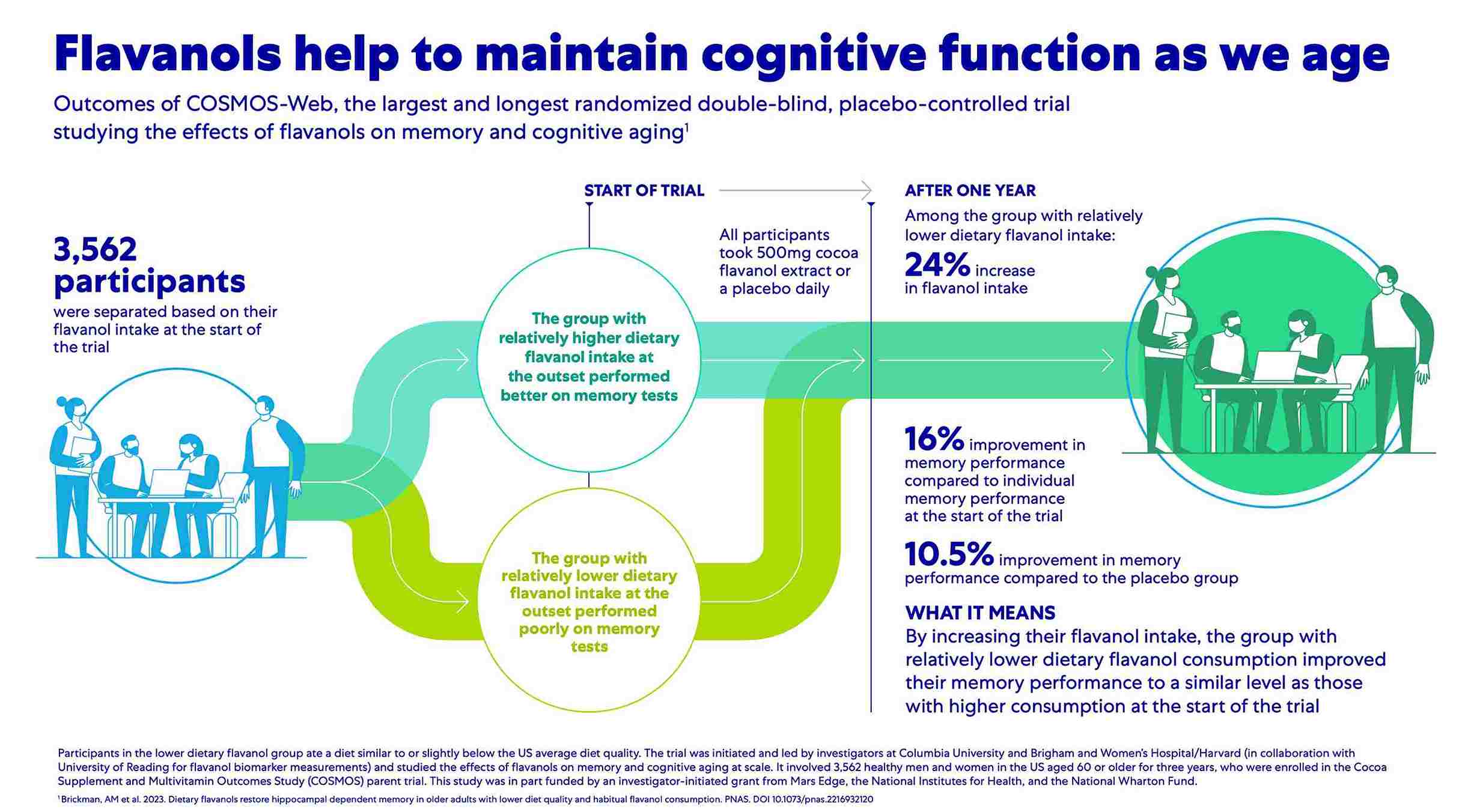
These results are particularly interesting since those in the lower diet quality group ate a diet similar to, or slightly below, the US average diet quality.
Download the COSMOS-Web paper: ‘Dietary flavanols restore hippocampal-dependent memory in older adults with lower diet quality and lower habitual flavanol consumption’.
You can also explore videos explaining the research on flavanols on YouTube.
Understanding flavanols and their dietary sources
Not all flavanols are the same – there are several different types of flavanols, which differ in and how they affect processes within the body. Depending on their chemical structures, flavanols can be clustered in distinct sub-groups that vary in their biochemical properties, efficacy, safe-use characteristics, and in their absorption, metabolism, distribution, and excretion in the human body.
COSMOS used cocoa flavanols as a model for increasing dietary flavanols. Cocoa flavanols are a mixture of flavanols that consists mainly of flavanol monomers (single molecules), especially (—)-epicatechin, as well as procyanidins, chain-like molecules composed of between 1 and 10 flavanol monomers. You can read more about (−)-epicatechin here.
Which foods contain flavanols?
Not all plant-based foods contain the same flavanols. The flavanols abundant in one plant may only be a minor component of another. The specific type and relative abundance of flavanols present in different plant-based foods varies significantly. Flavanol content in food is also affected by factors including cultivation, processing, and preparation.
Given the diversity of flavanols and considerable differences in their properties and relative abundance in food, estimating which foods and serving sizes are needed to achieve this daily intake becomes a challenge. You can read more about the flavanol content of food here.
Dietary guidance on flavanols
The Academy of Nutrition and Dietetics (AND) issued the first authoritative dietary guidance on flavanols in October 2022. The AND recommends consuming 400mg – 600mg of flavanols daily to support cardiometabolic health,
The guidance from the AND on flavanols states that “daily intake can reduce the risk associated with cardiovascular disease and diabetes, while increasing flavanol consumption may help improve blood pressure, cholesterol concentrations, and blood sugar”.
This guidance does not specify which types of flavanols should be consumed, making estimating servings of specific foods needed to achieve this intake challenging. However, the COSMOS trial can provide a useful comparison – you can find estimated serving sizes to achieve an intake equivalent to 500mg of cocoa flavanols in this factsheet.
Download the Flavanols, Health and Food factsheet
Based on the diversity of flavanols and their sources, future dietary recommendations may specify the types of flavanols that should be consumed, with evidence from large-scale studies like COSMOS supporting these conclusions.
A large body of evidence – further reading
Evidence from over 20 years of research conducted in collaboration with some of the world’s leading research institutions has jointly advanced the scientific understanding of flavanols and their health benefits.
Below are notable open-access publications on flavanols and cardiovascular and cognitive health, and their efficacy and safety. These studies have been conducted in collaboration with a global network of scientific partners.
Further reading on flavanols and cognitive health:
Further reading on flavanols and cardiovascular health:
Further reading on flavanols, efficacy and safety: